
Dental laser
Gum therapy, cold sore relief, sensitive teeth, and faster healing, using focused light instead of a blade or drill.
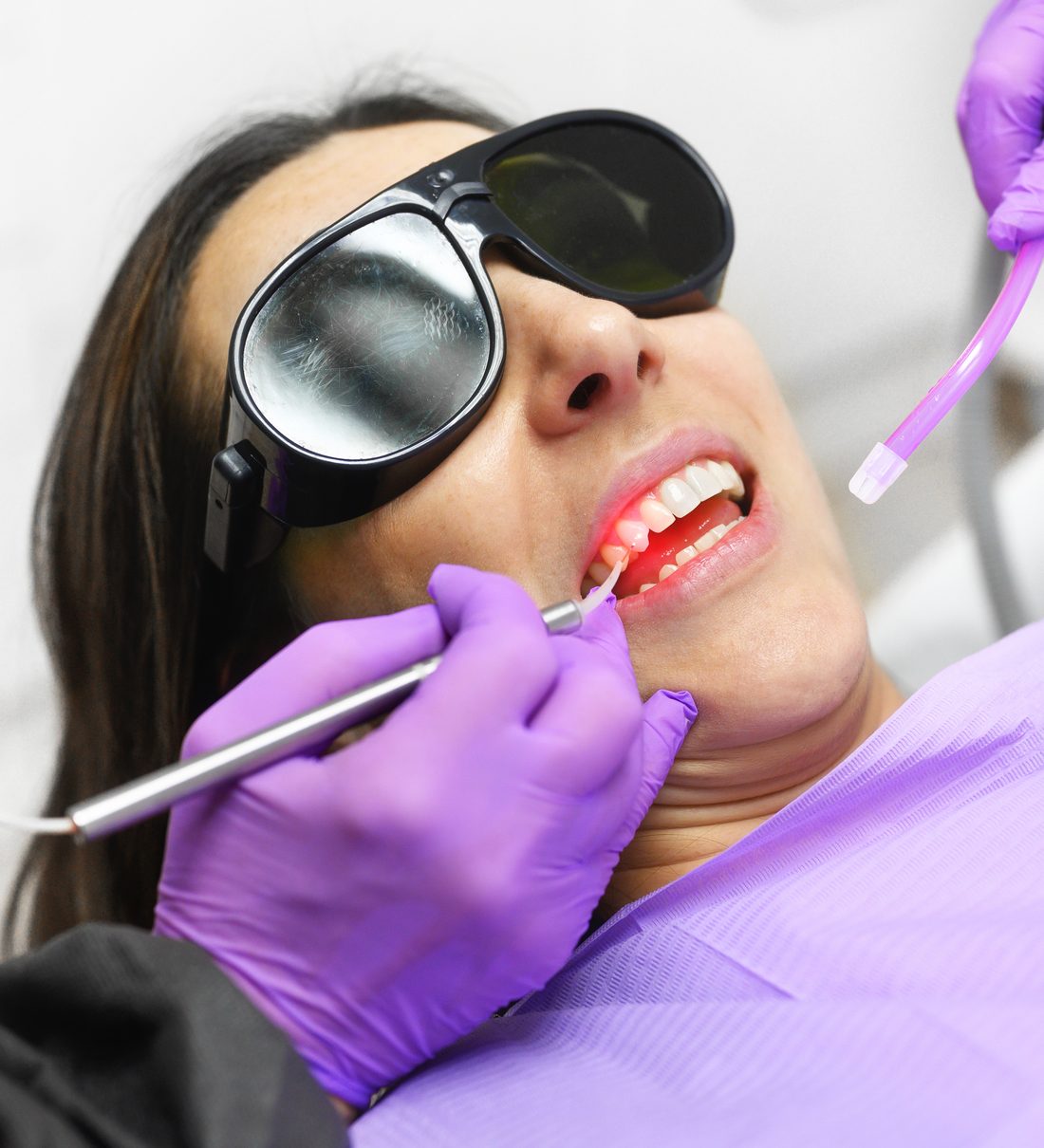
We use a dental laser for far more than cutting. Focused light lets us disinfect below the gum line, calm painful sores, settle sensitive teeth, and speed up healing, usually in a few minutes during a visit you were already having. Most laser treatment needs no incisions, no stitches, and no downtime.
Here is what we use it for most often.
Laser Gum Care
Laser Bacterial Reduction (LBR) and Laser-Assisted Periodontal Therapy (LAPT) use targeted light to kill harmful bacteria below the gum line, reduce inflammation, and support your body’s own healing.
A standard cleaning uses hand scalers and ultrasonic instruments, which do an excellent job on the hard surfaces of your teeth. A laser goes a step further, reaching into gum tissue and the microscopic pockets around each tooth where those instruments cannot.
- It protects more than your mouth. Bacteria from inflamed gums can enter your bloodstream and contribute to heart disease, diabetes complications, and other inflammatory conditions. The laser targets them at the source.
- Your mouth stays cleaner longer. Laser decontamination slows how quickly harmful bacteria come back, so your gums stay healthier between visits.
- It helps tissue heal. Laser light stimulates cells directly, encouraging faster repair and gum regeneration.
- It takes minutes. We add it to your routine hygiene appointment. No incisions, no sutures, no recovery time.
Cold Sores and Canker Sores
Mouth ulcers are genuinely disruptive. Whether it is the sting of a canker sore or the blistering of a cold sore, eating, drinking, and talking all become a chore, and both tend to come back. A soft tissue laser treats them directly.
- Relief that is usually immediate. The laser calms the nerve endings at the site. Most patients feel significantly better, often completely better, within minutes.
- Cold sores resolve faster. For herpetic lesions, laser energy penetrates the tissue and curbs activity of the herpes simplex virus, so the sore clears up sooner.
- Faster healing overall. Improved circulation and cell stimulation speed your body’s natural tissue repair.
- Often fewer outbreaks. Treatment changes the nerve pathways at the site, and many patients report future outbreaks in that spot are less frequent and less severe.
If you feel a cold sore coming on, call us early. Treating it at the tingling stage gives the best result.
Relief for Sensitive Teeth
If hot coffee, cold water, or anything sweet makes you wince, laser desensitization can help. Sensitivity usually comes from exposed dentin, where microscopic channels lead straight to the nerve inside your tooth. The laser seals those pathways and builds a protective barrier, which blocks the pain signal.
- No harsh chemicals or gels. The laser does the work on its own.
- Gentle and quick. Non-invasive, which makes it a good option if you are already anxious about dental work.
- Lasting relief. Results commonly hold for several months or longer.
- Your favorite foods back. Hot, cold, and sweet without the jolt.
Photobiomodulation Therapy
Photobiomodulation (PBM) uses low-level light energy to reduce inflammation and support healing. It is completely painless and cool to the touch. Most patients feel nothing beyond mild, soothing warmth.
We use it for:
- Recovery after treatment, to reduce swelling and discomfort
- TMJ and jaw pain, and easing muscle tension
- Canker sores and cold sores, to speed healing
- Periodontal healing and tissue regeneration
The benefits are straightforward: you recover faster, you usually need less pain medication, and it is drug-free, non-invasive, and safe with no side effects.
Is Laser Treatment Right for You?
Not every situation calls for a laser, and we will tell you plainly when a conventional approach is the better choice. If you are dealing with gum inflammation, recurring mouth sores, sensitive teeth, or jaw pain, it is worth asking about at your next visit. Dr. Augustine is a member of the Academy of Laser Dentistry.
Questions? Call us at (281) 204-8100.
Common Questions
Does laser dental treatment hurt?
Can a dental laser treat cold sores?
What is Laser Bacterial Reduction?
How long does laser treatment take?
Can a laser help with sensitive teeth?
Is laser dentistry safe?
Come say hi!
Ready for a dentist you'll actually look forward to?
Join thousands of Clear Lake families who've found their dental home. New patients are always welcome.
