
Teeth for life
Complete dental care, plus how to keep your smile healthy at home.

Near Clear Lake
Practicing good oral hygiene means maintaining your smile by visiting the dentist regularly and taking care of your teeth and gums between checkups. Our practice wants to make sure that you get the most out of your office visits, and that your teeth stay healthy for life! We'll work with you to provide complete dental care, and show you how to maintain your smile at home with the right dental products for you and your family.
Dental Cleanings and Regular Checkups
Regular dental checkups are an important part of maintaining your oral health. During your regular checkup, your hygienist will:
- Check for any problems that you may not see or feel
- Look for cavities or any other signs of tooth decay
- Inspect your teeth and gums for gingivitis and signs of periodontal disease
- Provide a thorough teeth cleaning, rinse, and polish
Visiting the dentist every six months gives you the chance to talk with your doctor and receive answers for any questions you may have about your oral health. Checkups are also a great way for you to find out about new treatments that may benefit your smile.
Choosing the Right Toothpaste and Toothbrush
From toothpaste and mouthwash to toothbrushes and dental floss, it's important to choose the right products for your smile. Keep in mind that when you're looking for a new toothpaste or toothbrush, be sure to choose one that has been approved by the American Dental Association (ADA). Your dentist can also help by recommending certain dental products for use at home.
Learn More
Did you know that at birth, people already have 20 primary (baby) teeth that begin erupting after six months, and that by age 21, there are no more primary teeth, and all 32 permanent teeth have erupted?
Getting to know your teeth can be fun and educational!
Anatomy of a Tooth
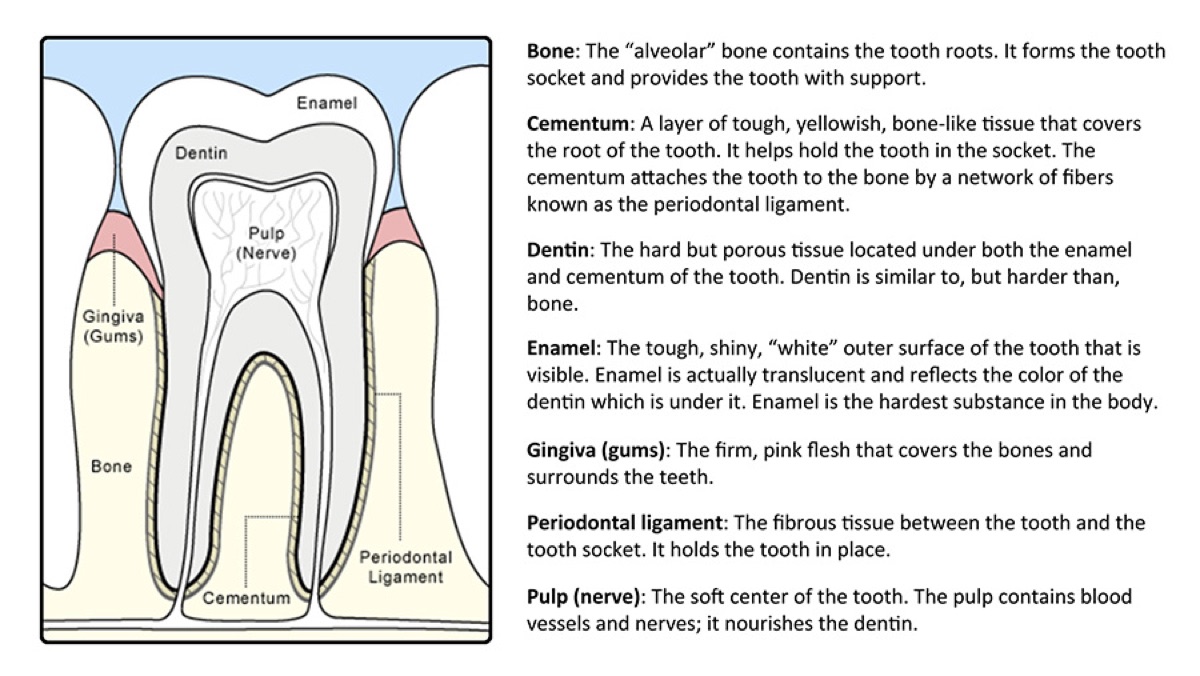
- Enamel: the hard, translucent outer surface, and the hardest substance in the body.
- Dentin: the porous layer beneath the enamel, similar to bone but harder.
- Pulp: the soft center holding the blood vessels and nerves that nourish the tooth.
- Cementum: the tough tissue covering the root and anchoring it in the socket.
- Gingiva: the firm pink gum tissue surrounding the teeth.
- Periodontal ligament: the fibrous tissue that holds the tooth in its socket.
- Alveolar bone: the bone that forms the socket and supports the tooth.
Tooth Eruption Chart
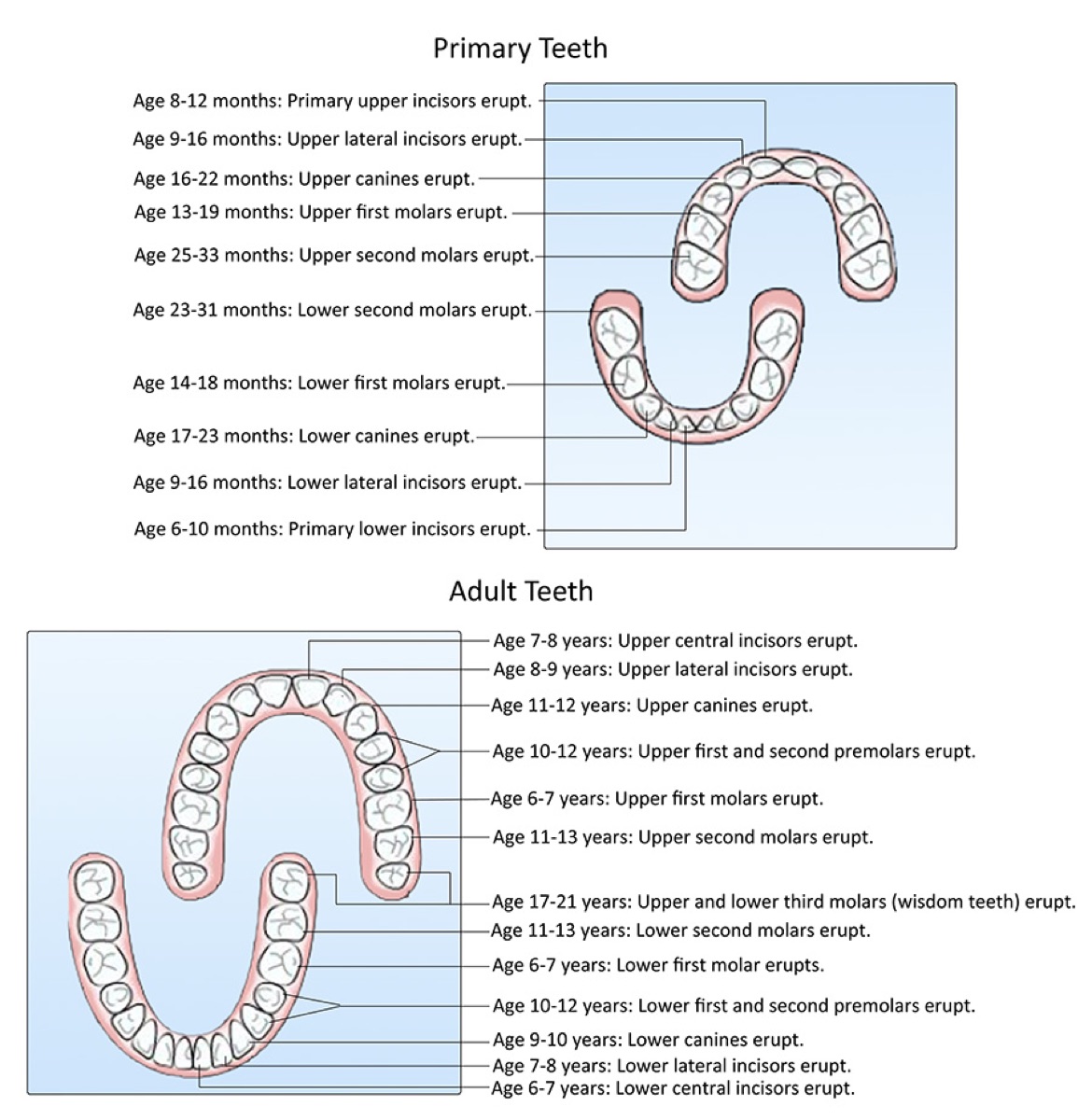
Every child is a little different, so do not worry if your child is a few months ahead or behind. If you have questions about how your child’s teeth are coming in, bring it up at their next visit and we will take a look.
Common Questions
What is the most important thing I can do for my teeth?
What kind of toothbrush should I use?
Is an electric toothbrush worth it?
Come say hi!
Ready for a dentist you'll actually look forward to?
Join thousands of Clear Lake families who've found their dental home. New patients are always welcome.
